Introduction
8:45 – 9:00 AM MST
Southern Alberta AI Conference 2026
Virtual Conference — July 24, 2026
SAAIC 2026 was a virtual conference. Talks and speaker profiles will be posted on this site soon.
The conference takes place Friday, July 24, 2026. Published session times will use Mountain Time.
Researchers, practitioners, students, educators, public-sector teams, and business professionals interested in how AI systems are being designed, adopted, and governed.
Expect practical examples, research perspectives, governance questions, and a clearer view of how intelligent systems are changing work and organizations.
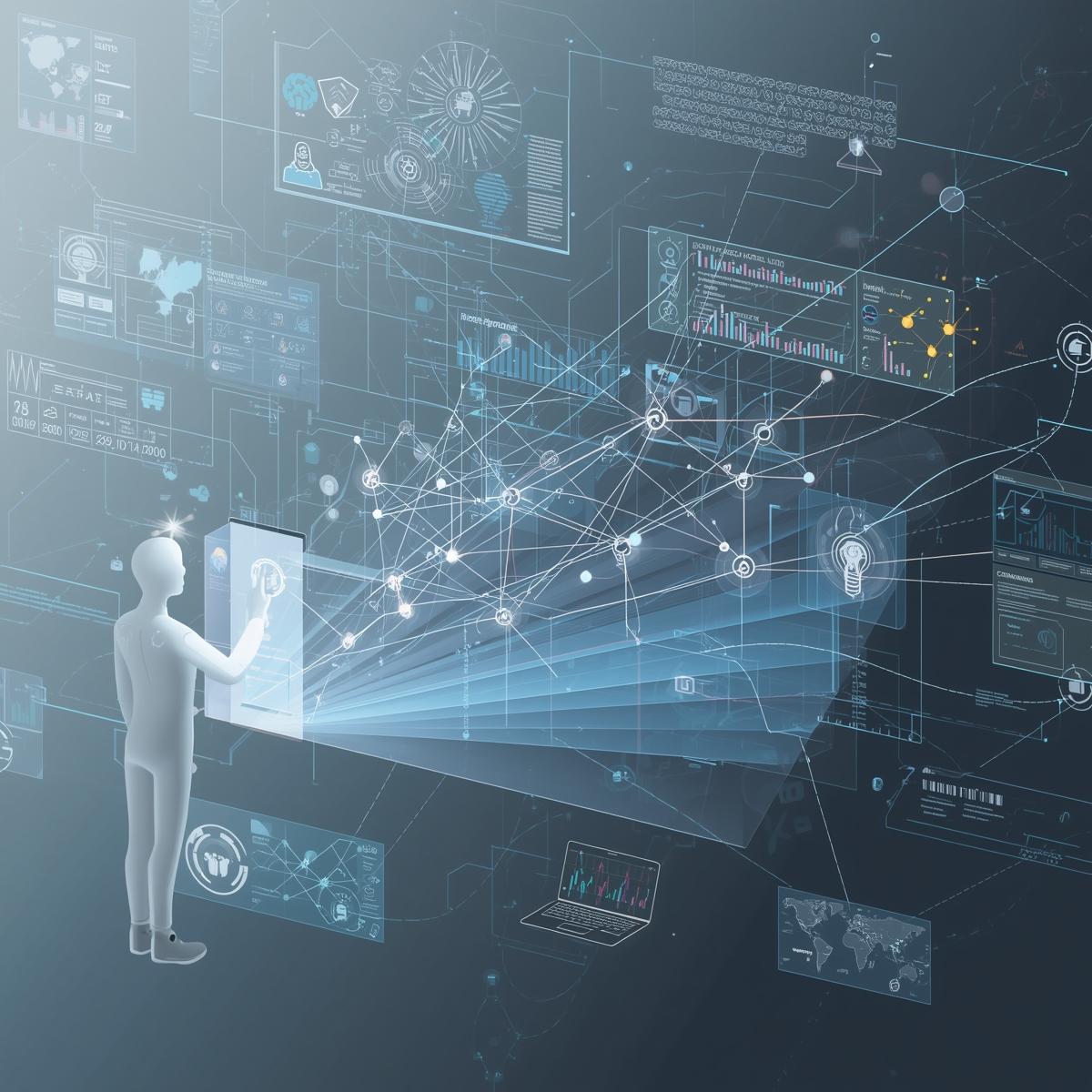
Artificial intelligence is moving beyond systems that simply generate responses to prompts. New developments in machine learning, autonomous agents, and integrated AI systems are enabling technologies that can plan, coordinate tools, and participate in complex workflows. As organizations experiment with these capabilities, questions are emerging about how intelligent systems should be designed, deployed, and governed. The next phase of AI is not only about generating content, but about building systems that interact with people, data, and institutions in meaningful ways.
The Southern Alberta AI Conference 2026 invites researchers, practitioners, and students to examine the expanding possibilities of AI and the implications for business, technology, and society. This year’s theme explores how intelligent systems are reshaping decision making, organizational processes, and human work. By bringing together perspectives from industry, academia, and public policy, the conference aims to clarify where AI is creating value, where risks and uncertainties remain, and how organizations can responsibly navigate the evolving landscape of intelligent systems.
Friday, July 24, 2026 · Mountain Time (MST). Each session features three 15-minute presentations followed by 15 minutes of audience questions. Launch is scheduled from 12:00 to 1:00 PM.
8:45 – 9:00 AM MST
9:00 – 10:00 AM MST
Inc the nation's leading black woman-owned security firm, offers expertise in all aspects of security, including forensic and cyber.
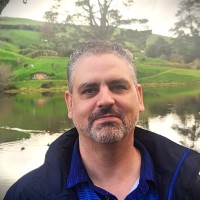
I've been an IT professional for over 20 years, focusing on hardware and software technical support. Today, I'm a programming student specializing in frontend development, using Python, HTML, CSS, Java, and JavaScript. To fund my studies, I'm currently working in sales on the Facebook Marketplace.
I'm part of the Google Product Experts team. I'm a YouTube specialist.
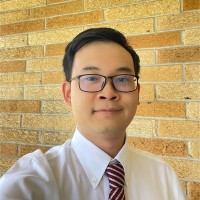
Vinh Lam is a Data Scientist and Analyst with expertise in business analytics and data visualization. He combines a strong background in accounting and finance with advanced technical skills in Python, R, SQL, and Power BI to deliver actionable insights for decision-makers.
10:00 – 11:00 AM MST
My name is Chikee Ifeoma Christiana, a Master's student in the Department of Media and Communication at Texas Tech University. I bring a strong blend of academic training and professional experience across consulting, public relations, and teaching. My interests lie at the intersection of media and emerging technologies, with a focus on how digital tools shape communication, innovation, and public engagement in diverse sectors.
Over the years, I have worked on a wide range of media-related projects—both professionally and personally. I have developed websites for e-commerce, NGOs, and business clients, combining technical skill with strategic design. I am also a professional photographer and graphic designer, skilled in visual communication and content creation.
This deep engagement with digital tools and creative communication has also informed my current graduate research, which focuses on Information and Communication Technology (ICT) and its role in African financial technology ecosystems. Through this work, I explore how digital innovation and ICTs are diffused, reinvented, and shaped by regulatory and cultural factors.
My academic path and creative practice reflect a commitment to communication that is strategic, impactful, and technologically informed. I continue to explore how media and technology can be used to inform, empower, and connect communities across global contexts.
Frank Onuh is a PhD Candidate and instructor at the University of Lethbridge whose research is at the intersection of information disorder (specifically decolonizing information verification practices in Africa), Artificial Intelligence (AI), media infrastructure, political economies of global media flows and inclusive technology systems. Over the past year, Mr Onuh has delivered presentations in many conferences in different continents covering a wide range of topics, including issues around misinformation, prompt engineering, inclusive and decolonial AI design and implementation, AI’ s role in education, and general utilitarian applications of artificial intelligence. Frank is also the executive director of AIRI Foundation, a not-for-profit organization that provides AI literacy training and adoption to Canadian organizations and businesses.
An advocate for AI adoption for business productivity (not writing or photography). I am all about creativity, innovation and immersive storytelling. I have taught for 14 years in the Digital Communications & Media and Multimedia Production diploma programs, I have 22 years of experience in the media industry as a writer and photographer, five years in economic development and three years in community capacity building encouraging renewable energy adoption.
11:00 AM – 12:00 PM MST
Dr. Prithvipal Singh is an AI/ML researcher and educator with a PhD in Computer Science (GNDU, 2023), GATE and UGC NET qualified, with 8+ years of university teaching experience. He has 17 publications including an Elsevier Q1 paper (IF 8.0) in Cybersecurity and publications in Taylor & Francis, Springer, MDPI, and IEEE. His research spans Natural Language Processing, Deep Learning, Generative AI, Mental Health AI Detection, and Cybersecurity with a strong focus on building intelligent systems that solve real societal problems. He has guided 20+ student projects and actively teaches cutting-edge topics including Large Language Models and Explainable AI.
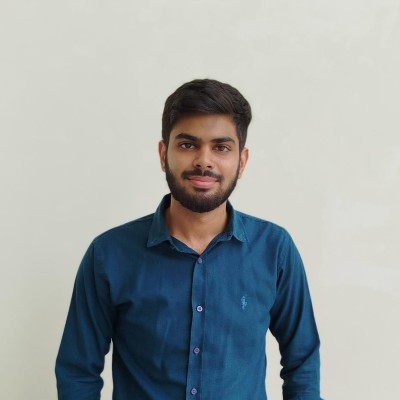
Anurag Yadav is the founder of Hybrid Octopus OS, a Multi-Model Living AI Operating System exploring the future of Human-Centric Intelligence.
His work focuses on a simple but ambitious question:
What happens when memory, reasoning, emotional context, learning, planning, decision support, and action are no longer separate AI tools, but part of one continuous intelligence system?
Through Hybrid Octopus OS, Anurag is researching concepts such as Emotional Digital Twins, Future Consequence Simulation, Cognitive Black Hole Engines, Long-Term Intent Memory, Explainable Decision Intelligence, and Human-Guided AI Systems.
His vision is to move beyond traditional prompt-response AI and explore how intelligent systems can help people think more clearly, make better decisions, and grow throughout their lives while remaining transparent, explainable, and human-controlled.
As an independent builder from India, he is actively seeking collaboration with researchers, engineers, founders, and organizations interested in shaping the next generation of human-centered AI systems.
Daniel Paul O'Donnell is Professor of English and principal of the Humanities Innovation Lab at the University of Lethbridge. He works on digital humanities, open scholarship, and human–AI collaboration, with current SSHRC-funded research on how the humanities take up — and resist — data.
12:00 – 1:00 PM MST
1:00 – 2:00 PM MST
My path into AI has been unconventional and deeply personal.
I began my academic journey studying medicine in Ukraine in 2021. When the war disrupted my studies, I relocated to Canada and rebuilt my direction from the ground up. I completed a diploma in Early Childhood Education with an Infant-Toddler specialization and spent two years working directly in childcare settings, where I developed a strong understanding of human behavior, care, and emotional development.
During my time in Canada, I became increasingly curious about technology and artificial intelligence. What started as exploring AI tools and comparing models gradually turned into a deeper interest in how AI systems work, how they are evaluated, and how they can be applied responsibly in real-world human contexts. Over time, I decided to formally pursue this interest and began a Bachelor of Computer Applications specializing in AI and Data Science in 2026.
Alongside my studies, I am building ROSA — an AI-powered lifestyle and wellness platform designed to support women, couples, and LGBTQ+ users. The idea for ROSA came from recognizing a gap in existing digital tools that often treat wellness as fragmented rather than holistic. While still in development, ROSA explores features like emotional support systems, cycle-aware health tracking, privacy-focused community spaces, and lifestyle planning tools.
What connects all parts of my journey — medicine, childcare, and now AI — is a consistent focus on people. I am especially interested in ethical AI design, social-impact technology, and building systems that are aware of emotional, physical, and cultural context rather than purely technical optimization.
Today, I am focused on learning AI deeply, building real products, and contributing to conversations around how AI can better serve human needs in everyday life.
Specialist in diagnosing and treating learning and speech difficulties, Arabic language teacher, educational technology trainer, digital skills and artificial intelligence in education
Shara Merrill is an artist and multimedia programmer with experience in developing games, apps and films. With a Bachelors in Media for Social Justice and a Masters in Digital Media, Shara was an early adopter of generative AI. She is using her PhD studies to examine the effects of AI on our economy and social structures.
2:00 – 3:00 PM MST
Khalid is a Ph.D. candidate in Cultural, Social, and Political Thought (CSPT) program at the University of Lethbridge, housed in the Department of English and Humanities Innovative Lab (HIL). His research explores the impact of Artificial Intelligence on the English language, aiming to safeguard linguistic diversity and cultural heritage in a rapidly changing world.
Laxman KC is a Full-Stack Software Developer and IT Technician based in Canada, currently working in Research & Development at Cambrian College. He develops and maintains software systems, data pipelines, server infrastructure, and AI-enabled tools for applied research projects. His technical expertise includes Python, TypeScript/JavaScript, FastAPI, Docker, PostgreSQL, cloud platforms, IoT systems, and LLM/RAG-based applications. Laxman is particularly interested in practical AI systems that enhance decision-making, automation, data analysis, and organizational workflows.
3:00 – 3:45 PM MST
I direct the Natural Product Laboratory at the University of Lethbridge. We investigate natural product chemicals in Canadian native plants to determine their value as medicines and scientific tools.
3:45 – 4:00 PM MST
Our past conferences were organized by faculty and students from the University of Lethbridge Dhillon School of Business and the Computer Science Program.

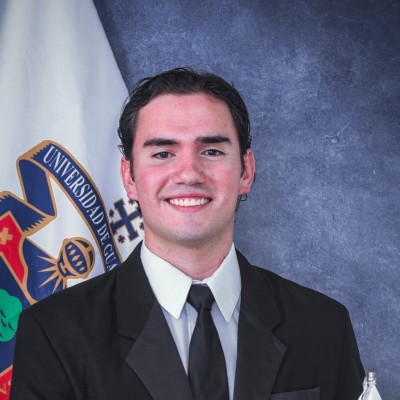
Mitacs GRI Intern | Production Engineering Student at Universidade Federal do Paraná.

Mitacs GRI Intern | Sociology Student at National University of Kyiv-Mohyla Academy.
We appreciate the support of the University of Lethbridge and the Dhillon School of Business as sponsors of SAAIC 2026.